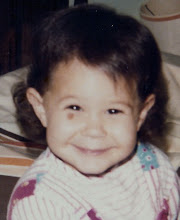
I mentioned a while back that I have done a couple of DNA tests. The first was with my mother; in the future, if I am able to have a test with someone (siblingship test or paternity test) it seems to be helpful to have the mother's DNA, if possible.
The second one I did is called Family Finder. Family Tree DNA does this test (and other DNA tests) and takes the results and enters them into their data bank to check against other participants. I am still learning about this site and what all it offers, but I've gotta tell you that I'm really impressed with it. I've gotten 160+ matches and the list is growing. I haven't found anyone closer than a 3rd cousin yet, but I'm very hopeful.
Throughout this crazy journey of being donor conceived, God has sent several people to help me with whatever it was that I needed at the time; emotional support, a direction to look, ideas on looking, financial gifts to pay for DNA tests, etc. The people that I've met have been wonderful folks that I wouldn't have known otherwise. I'm thankful to God for sending these people into my life.
The latest person is a man named Brian, whose father has shown up on my list of relatives as a distant cousin. Brian was able to read the proverbial writing on the Family Finder wall for me; my biological father is Jewish. I was both surprised and thrilled with this knowledge.
It feels so good to know something about this man who helped create me, but it is also wonderful to know this about myself; I have a history. I have a people. I was not raised Jewish, but I guess you could say that it's in my blood.
Brian also did a little digging for me about my mother's family, too, and I was surprised to find out interesting things about that line.
Even though this isn't a commerical for FTDNA, it's going to sound like it...if you are interested in genealogy, do this Family Finder test. If you want to find your biological family, this is a good place to start. If you just want to find people you share ancestors with, do this. I can't recommend it enough, and I don't even fully know everything that this site does yet! There are all kinds of cool tools that can be used to reconstruct a family tree.
So to Brian who helped me more than he knows, and to the one who made it possible for me to take this test, thank you.
Tuesday, March 15, 2011


Thursday, February 17, 2011
A Brief History of AI
(This can be found at FamilyScholars)
The following two articles come from Bill Cordray, who is a donor conceived adult in the U.S. who has spoken and written about donor insemination issues for years. He posted this letter some months back to the PCVAI (people conceived via artificial insemination) yahoo group, which can be found here. The first article is from The Medical World, and the second article is an excerpt from a paper that Bill wrote for a class in Reproductive Issues in the Philosophy Department at the University of Utah. I am posting these two articles here, with Bill’s permission.
I thought it was important to post this letter in its entirety.
The Medical World, April 1909 pp. 163-164: Letter to the Editor
Artificial Impregnation
Editor Medical World:
It has been twenty-five years since Professor Pancoast performed the first artificial impregnation of a woman, in the Sansom Street hospital of Jefferson Medical College, in Philadelphia. At that time the procedure was so novel, so peculiar in its human ethics, that the six young men of the senior class who witnest [witnessed?] the operation were pledged to absolute secrecy. The circumstances of the case were about as follows:
A wealthy merchant of Philadelphia consulted Professor Pancoast to learn why his home was childless. The man was forty-one years of age, of sound body as far as he knew, had a good family history, and had never suffered from any serious illness in his life, barring a slight attack of gonorrhea in his youth, while sowing the proverbial "wild oats."
His wife was ten years his junior, a perfect picture of health, and a product one of the old Quaker families of wealth and distinction in Quakerville.
An appointment was made with the both for an examination at the Sansom Street hospital, and a section of the senior class, of which I was one, was called upon to assist the Professor. The supposition on the part of the Professor was that the woman was unable to conceive because of some impediment which possibly might be removed. Therefore, she was examined first. The examination was very complete, almost as perfect as an army examination, but not the slightest abnormal condition was discovered. As a matter of possible public interest, I will say that during this examination was discovered for the first time, as far as I know, the suction function of the uterus, which takes place during orgasm.
The man was then examined; and while no physical defect was discoverable, the spermatic fluid was shown by the microscopic examination to be absolutely void of spermatozoons. This, of course, cleared up the situation at once, and the man was informed that the fault was his, and probably due to results of the gonorrhea in his youth. Professor Pancoast at that time considered the trouble as easily remedied, and began a course of treatment which he thought proper.
But after two months' careful attention, the man showed no change whatever, and the Professor then concluded that the primary seminal ducts were occluded by the former inflammation extending upward from the urethra. A joking remark by one the class, "the only solution of this problem is to call in the hired man," was the probable incentive to the plan of action which followed. The woman was chloroformed, and with a hard rubber syringe some fresh semen from the best-looking member of the class was deposited in the uterus, and the cervix slightly plugged with gauze. Neither the man nor the woman knew the nature of what had been done at the time, but subsequently the Professor repented of his action, and explained the whole matter to the husband. Strange as it may seem, the man was delighted with the idea, and conspired with the Professor in keeping from the lady the actual way by which her impregnation was brought about. In due course of time the lady gave birth to a son, and he had characteristics features, not of the senior student, but of the willing but impossible father.
That boy is now a business man of the city of New York, and I have shaken his hands with him within the past year.
Since then there has been formed an association for the purpose of producing artificial impregnation of women who may for any reason give a written consent to such a proceeding. From a nature point of view the idea of artificial impregnation offers valuable advantages. The mating of human beings must, from the nature of things, be a matter of sentiment alone. Persons of the worst possible promise of good and healthy offspring are being lawfully united in marriage everyday. Marriage is a proposition which is not submitted to good judgment or even common sense, as a rule. No Burbank methods are possible, even tho they be ideal. Artificial impregnation by carefully selected seed, alone will solve the problem. It may at first shock the delicate sensibilities of the sentimental who consider that the source of the seed indicates the true father, but when the scientific fact becomes known that the origin of the spermatozoa which generates the ovum is of no more importance that the personality of the finger which pulls the trigger of a gun, then objections will lose their forcefulness, and artificial impregnation become recognized as a race-uplifting procedure.
It is gradually becoming well established that the mother is the complete builder of the child. It is her blood that gives it material for its body, and her nerve energy which is divided to supply its vital force. It is her mental ideals which go to influence, to some extent at least, the features, the tendencies, and the mental caliber of the child. "Many a man rocks another man's child and thinks he is rocking his own," for it looks like him. And often two children by the same parents have feature entirely dissimilar. It is the predominating mental ideals prevailing with the mother that shapes the destiny of the child. The man who thrusts his nose into a beautiful blossom to surfeit his sense of smell on the sweet perfume is merely breathing the lustful odor from the sexual organ of the plant; and if his nose displaces some of the pollen, he may be the father of the next flower. If a honey bee does the work, it might be called the father.
A scientific study of sex selection, without regard to marriage conditions, might result in giving some men children of wonderful endowments, in place of half-witted, evil-inclined, disease-disposed offspring which they are ashamed to call their own. The mechanical method of impregnation, whether it be the orthodox way, or the aseptic surgeon's skillful fingers, counts but little, except sentiment, and sentiment is fast becoming a servant instead of a master in the affairs of the human race. Few are the children that are brought intentionally into this world. As a rule they are but the incidental result of a journey in search of selfish pleasure. They are seldom sought, and often unwelcome when they pout in their first appearance. The subsequent mother's love is largely a matter of growth, for affection is but an attribute of selfishness.
The man who may think this idea shocking probably has millions of gonococci swarming in his seminal ducts, and probably his wife has had a laparotomy which nearly cost her life itself, as a result of his infecting her with the crop reaped from his last planting of "wild oats." One man in every five in New York City was found to be free from the contamination of venereal disease to an extant that rendered him safe ["unsafe?"] around the house in which a woman lived.
Go ask the blind children whose eyes were saturated with the gonorrheal pus as they struggled thru the birth canal to merge into this world of darkness to endure a living death; ask them what is the not shocking thing in this whole world. Ask Helen Keller what is the most shocking thing in this sin-soaked ball of selfish pursuits. They will tell you it is the idea that man, wonderful man, is infecting 80 percent of all womankind with the satanic germs collected by him as his youthful steps wandered in the "bad lands." A. D. Hard, M.D., Marshall, Minn. [I think his first name is Addison]
******************************************************
Bio of Professor Pancoast:
His son, William Henry, surgeon, born in Philadelphia, Pennsylvania, 16 October, 1835, was graduated at the Jefferson medical college in 1856, studied for three years in London, Paris, and Vienna, and on his return established himself in practice in Philadelphia, and acquired a high reputation as a bold, rapid, and skilful operative surgeon, conservative in treatment and seldom mistaken in diagnosis. During the civil war he served as a surgeon in the army. In 1874 he succeeded his father as professor in Jefferson medical college. In 1884 he secured the bodies of the Siamese twins, and proved that the band could not have been safely cut except in their childhood. He became professor of the Philadelphia medico-chirurgical college in 1886.
Bill’s paper:
Why did anonymous fathers become an inherent ingredient in donor insemination, the oldest form of assisted reproductive technology? From the start, at least as far as we can tell from the first purported use of donor insemination in 1884 by Dr. William Pancoast (The Medical World, April 1909 pp. 163-164: Letter to the Editor), it appears that one of his unknown medical students, jokingly called the “Hired Hand,” was used in order to deceive the wife about the process and to encourage her to believe that her husband was the father. There was no informed consent and the husband was told only after the wife became pregnant. Professor Pancoast then set up an “association for the purpose of producing artificial impregnation of women who may for any reason give a written consent to such a proceeding.” [ibid. Medical World]. It is implied that the business of donor insemination then began and followed informed consent but nothing is said about anonymity. The inference from this article is that the “impregnator” is not significant since the mother is the “is the complete builder of the child.” The writer then goes on to add that “the origin of the spermatozoa,,, is of no more importance that the personality of the finger which pulls the trigger of a gun… (and therefore)… artificial impregnation [should] become recognized as a race-uplifting procedure.” [Cite Medical World]. From the attitude of the letter writer it seems clear that he advocates the use of artificial insemination using “carefully selected seed.” In other words, this first use of DI is touted as a way for society to become the “master in the affairs of the human race.” As reported in an article called “The Impregnators” in “Fertility and Sterility” (A. T. Gregoire, PhD and Robert C. Mayer, MD; F&S vol.16, no. 6, 1965, p. 130 - 134) the 1909 letter caused a debate between those who felt DI violated the laws of God, “ridiculously criminal,” “neither honest nor moral,” to those who support the eugenic idea that artificial impregnation “could improve the genetic stock of America.” The moral criticisms of the act were dismissed “since the question of morals belonged in the theological journal, not a scientific publication.” “Doctors have enough of the laws of God when they are young…” and “without disrespect to Nature and Nature’s God, they (doctors) modify creation and improve it with intelligence.” After this brief uproar the practice went underground so that we know very little about the early years of donor insemination. Discussion of artificial reproduction appeared in various journals and lectures as early as 1910 (Hermann Muller) and even in literature such as Buck Mulligan’s proposal for a “fertilising farm to be named Omphalos with an obelisk” erected (phallic pun intended by Joyce) in the “Oxen of the Sun” episode of Ulysses (1922; 14: lines 651 to 737) as well as in Huxley’s Brave New World (1932). Actual mention of DI as a current practice is rarely mentioned, although we can’t assume that it didn’t continue. If it was practiced, then it survived under a cloak of secrecy reinforced with instructions to recipients to refrain from telling their children.
Excerpts from various early guides for fertility often stress that the identity of the donors must obviously remain anonymous. For example, W. J. Finegold wrote (Artificial Insemination; Springfield Illinois, Charles C. Thomas; 1964) that “the donors should be veiled in absolute obscurity.” M. Glezerman (‘Two hundred and seventy cases of artificial donor insemination,’ Fertility and Sterility 1981:35:180-7) wrote “the donor semen should be regarded as ‘material from an anonymous testis’” and that the genetic father is actually a “non-person.” Although 1982 marked the first break from anonymous donors through The Sperm Bank of California, a nonprofit feminist clinic, Sherman Silber (How To Get Pregnant; Little, Brown and Company; 2005, p. 415) wrote that “the majority of physicians still oppose identity release donors, with the (unsubstantiated) claim that the vast majority of couples prefer anonymous sperm.”
The following two articles come from Bill Cordray, who is a donor conceived adult in the U.S. who has spoken and written about donor insemination issues for years. He posted this letter some months back to the PCVAI (people conceived via artificial insemination) yahoo group, which can be found here. The first article is from The Medical World, and the second article is an excerpt from a paper that Bill wrote for a class in Reproductive Issues in the Philosophy Department at the University of Utah. I am posting these two articles here, with Bill’s permission.
I thought it was important to post this letter in its entirety.
The Medical World, April 1909 pp. 163-164: Letter to the Editor
Artificial Impregnation
Editor Medical World:
It has been twenty-five years since Professor Pancoast performed the first artificial impregnation of a woman, in the Sansom Street hospital of Jefferson Medical College, in Philadelphia. At that time the procedure was so novel, so peculiar in its human ethics, that the six young men of the senior class who witnest [witnessed?] the operation were pledged to absolute secrecy. The circumstances of the case were about as follows:
A wealthy merchant of Philadelphia consulted Professor Pancoast to learn why his home was childless. The man was forty-one years of age, of sound body as far as he knew, had a good family history, and had never suffered from any serious illness in his life, barring a slight attack of gonorrhea in his youth, while sowing the proverbial "wild oats."
His wife was ten years his junior, a perfect picture of health, and a product one of the old Quaker families of wealth and distinction in Quakerville.
An appointment was made with the both for an examination at the Sansom Street hospital, and a section of the senior class, of which I was one, was called upon to assist the Professor. The supposition on the part of the Professor was that the woman was unable to conceive because of some impediment which possibly might be removed. Therefore, she was examined first. The examination was very complete, almost as perfect as an army examination, but not the slightest abnormal condition was discovered. As a matter of possible public interest, I will say that during this examination was discovered for the first time, as far as I know, the suction function of the uterus, which takes place during orgasm.
The man was then examined; and while no physical defect was discoverable, the spermatic fluid was shown by the microscopic examination to be absolutely void of spermatozoons. This, of course, cleared up the situation at once, and the man was informed that the fault was his, and probably due to results of the gonorrhea in his youth. Professor Pancoast at that time considered the trouble as easily remedied, and began a course of treatment which he thought proper.
But after two months' careful attention, the man showed no change whatever, and the Professor then concluded that the primary seminal ducts were occluded by the former inflammation extending upward from the urethra. A joking remark by one the class, "the only solution of this problem is to call in the hired man," was the probable incentive to the plan of action which followed. The woman was chloroformed, and with a hard rubber syringe some fresh semen from the best-looking member of the class was deposited in the uterus, and the cervix slightly plugged with gauze. Neither the man nor the woman knew the nature of what had been done at the time, but subsequently the Professor repented of his action, and explained the whole matter to the husband. Strange as it may seem, the man was delighted with the idea, and conspired with the Professor in keeping from the lady the actual way by which her impregnation was brought about. In due course of time the lady gave birth to a son, and he had characteristics features, not of the senior student, but of the willing but impossible father.
That boy is now a business man of the city of New York, and I have shaken his hands with him within the past year.
Since then there has been formed an association for the purpose of producing artificial impregnation of women who may for any reason give a written consent to such a proceeding. From a nature point of view the idea of artificial impregnation offers valuable advantages. The mating of human beings must, from the nature of things, be a matter of sentiment alone. Persons of the worst possible promise of good and healthy offspring are being lawfully united in marriage everyday. Marriage is a proposition which is not submitted to good judgment or even common sense, as a rule. No Burbank methods are possible, even tho they be ideal. Artificial impregnation by carefully selected seed, alone will solve the problem. It may at first shock the delicate sensibilities of the sentimental who consider that the source of the seed indicates the true father, but when the scientific fact becomes known that the origin of the spermatozoa which generates the ovum is of no more importance that the personality of the finger which pulls the trigger of a gun, then objections will lose their forcefulness, and artificial impregnation become recognized as a race-uplifting procedure.
It is gradually becoming well established that the mother is the complete builder of the child. It is her blood that gives it material for its body, and her nerve energy which is divided to supply its vital force. It is her mental ideals which go to influence, to some extent at least, the features, the tendencies, and the mental caliber of the child. "Many a man rocks another man's child and thinks he is rocking his own," for it looks like him. And often two children by the same parents have feature entirely dissimilar. It is the predominating mental ideals prevailing with the mother that shapes the destiny of the child. The man who thrusts his nose into a beautiful blossom to surfeit his sense of smell on the sweet perfume is merely breathing the lustful odor from the sexual organ of the plant; and if his nose displaces some of the pollen, he may be the father of the next flower. If a honey bee does the work, it might be called the father.
A scientific study of sex selection, without regard to marriage conditions, might result in giving some men children of wonderful endowments, in place of half-witted, evil-inclined, disease-disposed offspring which they are ashamed to call their own. The mechanical method of impregnation, whether it be the orthodox way, or the aseptic surgeon's skillful fingers, counts but little, except sentiment, and sentiment is fast becoming a servant instead of a master in the affairs of the human race. Few are the children that are brought intentionally into this world. As a rule they are but the incidental result of a journey in search of selfish pleasure. They are seldom sought, and often unwelcome when they pout in their first appearance. The subsequent mother's love is largely a matter of growth, for affection is but an attribute of selfishness.
The man who may think this idea shocking probably has millions of gonococci swarming in his seminal ducts, and probably his wife has had a laparotomy which nearly cost her life itself, as a result of his infecting her with the crop reaped from his last planting of "wild oats." One man in every five in New York City was found to be free from the contamination of venereal disease to an extant that rendered him safe ["unsafe?"] around the house in which a woman lived.
Go ask the blind children whose eyes were saturated with the gonorrheal pus as they struggled thru the birth canal to merge into this world of darkness to endure a living death; ask them what is the not shocking thing in this whole world. Ask Helen Keller what is the most shocking thing in this sin-soaked ball of selfish pursuits. They will tell you it is the idea that man, wonderful man, is infecting 80 percent of all womankind with the satanic germs collected by him as his youthful steps wandered in the "bad lands." A. D. Hard, M.D., Marshall, Minn. [I think his first name is Addison]
******************************************************
Bio of Professor Pancoast:
His son, William Henry, surgeon, born in Philadelphia, Pennsylvania, 16 October, 1835, was graduated at the Jefferson medical college in 1856, studied for three years in London, Paris, and Vienna, and on his return established himself in practice in Philadelphia, and acquired a high reputation as a bold, rapid, and skilful operative surgeon, conservative in treatment and seldom mistaken in diagnosis. During the civil war he served as a surgeon in the army. In 1874 he succeeded his father as professor in Jefferson medical college. In 1884 he secured the bodies of the Siamese twins, and proved that the band could not have been safely cut except in their childhood. He became professor of the Philadelphia medico-chirurgical college in 1886.
Bill’s paper:
Why did anonymous fathers become an inherent ingredient in donor insemination, the oldest form of assisted reproductive technology? From the start, at least as far as we can tell from the first purported use of donor insemination in 1884 by Dr. William Pancoast (The Medical World, April 1909 pp. 163-164: Letter to the Editor), it appears that one of his unknown medical students, jokingly called the “Hired Hand,” was used in order to deceive the wife about the process and to encourage her to believe that her husband was the father. There was no informed consent and the husband was told only after the wife became pregnant. Professor Pancoast then set up an “association for the purpose of producing artificial impregnation of women who may for any reason give a written consent to such a proceeding.” [ibid. Medical World]. It is implied that the business of donor insemination then began and followed informed consent but nothing is said about anonymity. The inference from this article is that the “impregnator” is not significant since the mother is the “is the complete builder of the child.” The writer then goes on to add that “the origin of the spermatozoa,,, is of no more importance that the personality of the finger which pulls the trigger of a gun… (and therefore)… artificial impregnation [should] become recognized as a race-uplifting procedure.” [Cite Medical World]. From the attitude of the letter writer it seems clear that he advocates the use of artificial insemination using “carefully selected seed.” In other words, this first use of DI is touted as a way for society to become the “master in the affairs of the human race.” As reported in an article called “The Impregnators” in “Fertility and Sterility” (A. T. Gregoire, PhD and Robert C. Mayer, MD; F&S vol.16, no. 6, 1965, p. 130 - 134) the 1909 letter caused a debate between those who felt DI violated the laws of God, “ridiculously criminal,” “neither honest nor moral,” to those who support the eugenic idea that artificial impregnation “could improve the genetic stock of America.” The moral criticisms of the act were dismissed “since the question of morals belonged in the theological journal, not a scientific publication.” “Doctors have enough of the laws of God when they are young…” and “without disrespect to Nature and Nature’s God, they (doctors) modify creation and improve it with intelligence.” After this brief uproar the practice went underground so that we know very little about the early years of donor insemination. Discussion of artificial reproduction appeared in various journals and lectures as early as 1910 (Hermann Muller) and even in literature such as Buck Mulligan’s proposal for a “fertilising farm to be named Omphalos with an obelisk” erected (phallic pun intended by Joyce) in the “Oxen of the Sun” episode of Ulysses (1922; 14: lines 651 to 737) as well as in Huxley’s Brave New World (1932). Actual mention of DI as a current practice is rarely mentioned, although we can’t assume that it didn’t continue. If it was practiced, then it survived under a cloak of secrecy reinforced with instructions to recipients to refrain from telling their children.
Excerpts from various early guides for fertility often stress that the identity of the donors must obviously remain anonymous. For example, W. J. Finegold wrote (Artificial Insemination; Springfield Illinois, Charles C. Thomas; 1964) that “the donors should be veiled in absolute obscurity.” M. Glezerman (‘Two hundred and seventy cases of artificial donor insemination,’ Fertility and Sterility 1981:35:180-7) wrote “the donor semen should be regarded as ‘material from an anonymous testis’” and that the genetic father is actually a “non-person.” Although 1982 marked the first break from anonymous donors through The Sperm Bank of California, a nonprofit feminist clinic, Sherman Silber (How To Get Pregnant; Little, Brown and Company; 2005, p. 415) wrote that “the majority of physicians still oppose identity release donors, with the (unsubstantiated) claim that the vast majority of couples prefer anonymous sperm.”
Saturday, February 12, 2011
Yes, I'm still alive
There's not much going on lately in regards to my search for my genetic father. I've taken a DNA test with my mom and I've also done a second test. I'll talk about that more in the future, once I get all the results back.
It's been quite a while since I've posted anything at FamilyScholars.org. I have three articles that I'm working on. I'm frustrated with myself for not getting things done in a timely manner, yet I can't just slap it on there without making sure that I'm saying everything exactly the way that I want it said. I'm not good at juggling things, and being a wife and mother consumes most of my time and energy. But my brain is contantly thinking. Though if you knew me, it might surprise you to know that!
It's been quite a while since I've posted anything at FamilyScholars.org. I have three articles that I'm working on. I'm frustrated with myself for not getting things done in a timely manner, yet I can't just slap it on there without making sure that I'm saying everything exactly the way that I want it said. I'm not good at juggling things, and being a wife and mother consumes most of my time and energy. But my brain is contantly thinking. Though if you knew me, it might surprise you to know that!
Sunday, November 14, 2010
Update and Another FS Post
I'm still searching for my bio-father. It's slow and I feel like I've hit another brick wall. There are avenues that I can pursue to find more information, but one way seems like a cliff and the other way seems like a forest fire. So which way do I go? Both ways seem pointless. But I guess I'll chose one, then the other. When I can get my game face on again.
*********
I've posted again at FamilyScholars.org and I'm reposting it here. Be sure to read the comments here.
Can I make a faith-based argument about donor conception in public?
The short answer is yes.
Over the last several decades, our country and the makeup of our culture have slowly begun to embrace a pluralistic worldview when it comes to life and the pursuit of happiness. A plethora of worldviews are gaining influence and strength within the public square. Unfortunately, those who profess a strong conviction for tolerance of all kinds of people and ideas are actually becoming more and more intolerant of the segment of our nation that happens to view life and happiness from a ‘religious’ perspective. From their view point, it seems that to engage in public debate, one does not need to bring up their ‘religion’ because ‘religion’ isn’t relevant or valid to today’s complicated social issues.
So to argue that one should not acknowledge their religion in public debate is to say that every point of view is valid except a religious POV. Why? Simply because someone doesn’t acknowledge the validity of a religious view over them doesn’t make the argument invalid.
The long answer goes something like this: every time anyone argues a position on a given topic, it’s always a “faith-based” answer. Your faith may not be the same faith as an organized religion; however everyone has some type of faith, including atheists. An atheist has faith in his or her assessment that there is no God. Basically faith is trust, so they are trusting in their own judgment/intellect/experience that what they believe is right. So there is trust, even if the person is claiming to have no faith in any deity.
How do you interpret the world around you? How do you determine what is right and what is wrong? Where do your ethics come from? How do your ethics influence what you believe about a particular subject? What is your worldview? Do you have faith that your perception of the world is correct?
As a Christian, I believe Scripture, when it says that God created the heavens and the earth. He determines what is right and wrong because of His character; He is always “right” and whatever is not right is sin; treason against God. So my sense of right and wrong and my ethics come from who God is. My view of who God is influences my POV on a given subject.
If a person puts their faith/trust/belief in secularism or atheism or humanism, etc., then I think it’s fair to say that everyone has some kind of “faith” so therefore every argument is a “faith-based” argument. Whether they may recognize it or not.
*********
I've posted again at FamilyScholars.org and I'm reposting it here. Be sure to read the comments here.
Can I make a faith-based argument about donor conception in public?
The short answer is yes.
Over the last several decades, our country and the makeup of our culture have slowly begun to embrace a pluralistic worldview when it comes to life and the pursuit of happiness. A plethora of worldviews are gaining influence and strength within the public square. Unfortunately, those who profess a strong conviction for tolerance of all kinds of people and ideas are actually becoming more and more intolerant of the segment of our nation that happens to view life and happiness from a ‘religious’ perspective. From their view point, it seems that to engage in public debate, one does not need to bring up their ‘religion’ because ‘religion’ isn’t relevant or valid to today’s complicated social issues.
So to argue that one should not acknowledge their religion in public debate is to say that every point of view is valid except a religious POV. Why? Simply because someone doesn’t acknowledge the validity of a religious view over them doesn’t make the argument invalid.
The long answer goes something like this: every time anyone argues a position on a given topic, it’s always a “faith-based” answer. Your faith may not be the same faith as an organized religion; however everyone has some type of faith, including atheists. An atheist has faith in his or her assessment that there is no God. Basically faith is trust, so they are trusting in their own judgment/intellect/experience that what they believe is right. So there is trust, even if the person is claiming to have no faith in any deity.
How do you interpret the world around you? How do you determine what is right and what is wrong? Where do your ethics come from? How do your ethics influence what you believe about a particular subject? What is your worldview? Do you have faith that your perception of the world is correct?
As a Christian, I believe Scripture, when it says that God created the heavens and the earth. He determines what is right and wrong because of His character; He is always “right” and whatever is not right is sin; treason against God. So my sense of right and wrong and my ethics come from who God is. My view of who God is influences my POV on a given subject.
If a person puts their faith/trust/belief in secularism or atheism or humanism, etc., then I think it’s fair to say that everyone has some kind of “faith” so therefore every argument is a “faith-based” argument. Whether they may recognize it or not.
Tuesday, September 21, 2010
Misconceived: Misconceptions About Donor Conception
I posted this on FamilyScholars.org the other day. Thought I'd put it here, too. There were several good comments if you want to jump over there and read them.
***********
After finding out that my parents used a sperm donor to conceive me, the first place I went to on the Internet to find support was a bulletin board of moms that I frequented. It didn’t occur to me to use Google to find other donor conceived people. I just went to the sites I always went to. I posted a message asking if anyone was conceived with a sperm donor.
My very first reply was from a lady whose sister had used a sperm donor, and the little girl was about 3. This lady told me that I needed to write my parents a thank you note for raising me. She was very hostile and rude about it.
I don’t think I was mad about it so much as I was hurt. I needed someone to throw me a lifeline to pull me out of the depth of despair that was taking over my life, and she threw me a ton of bricks to sink me even deeper.
Since then, I’ve had a few responses that I assume were not well thought-out before they came out of the person’s mouth. I’ve been told that sperm donation is like giving blood, and that it’s like adoption. A couple of people have asked if I still think of my (social) dad as Dad.
So I’d like to clear up a few* misconceived ideas about donor conception. Please note that feelings about donor conception vary greatly from person to person. Sometimes, feelings vary greatly within just one person; they may be fine with it one day, and angry about it the next day.
I enlisted the help of several donor conceived people who contributed some of the misconceptions that they’ve heard from people. My thanks to you.
Misconception #1: “My Daddy’s Name is Donor.” The term “donor conceived” is actually an inaccurate term for most of us. Our fathers (or mothers in the case of egg donations) never “donated” gametes, but were paid for their services. A donation is what is given out of the generosity of heart, but money exchanged for goods is called a transaction. “Transaction conceived” doesn’t really have a nice ring to it, though, does it?
Misconception #2: The donor is not a parent. Once I got over the initial shock of this new reality, I realized that there is a man out there who is my biological father. Not just a “nice man” who helped create me, but an actual father; a man with whom I have a real substantial connection. Please realize that donors are not like McDonald’s where you can go and pick up a Dr. Pepper. I can buy a Dr. Pepper from McDonald’s close to home or three states away and it will be pretty much the same. I can even go to Wendy’s and get the exact same Dr. Pepper as McDonald’s.
A man and his sperm are not like a restaurant and its soft drinks. No man is exactly like another man, and his sperm is not exactly the same as another man’s sperm. The DNA that my father contributed to my creation cannot be duplicated by anyone else (unless he has an identical twin). My father’s sperm is uniquely his. I, Stephanie, exist because his sperm containing his unique DNA fertilized my mother’s egg with her unique DNA. He helped create me. He isn’t my Dad, but he is my father.
Misconception #3: Agreeing to parent another man’s child makes a man a Dad. This may or may not be true, depending on the man. Not all donor conceived people have good relationships with their social fathers. I am so blessed that I have a fantastic Dad who raised me. But many social fathers never really become “Daddy” to the child who was conceived with another man’s sperm. I think it takes a really special man to become a Dad (and by the name Dad, I’m implying that there is a special affectionate relationship to the child and he’s not just an authority figure) whether it is through donation, adoption, step-parenting, or any other situation in which a man finds himself parenting.
Misconception #4: Really wanting a child makes you a good parent. Even when a child is “really wanted,” it doesn’t guarantee that “really wanted” translates into good parenthood any more than getting pregnant by surprise makes a person a good parent.
As for a person being told that they were “really wanted,” one woman put it this way: “Well actually, NO! The baby my parents REALLY wanted was the one they could never have. I was just their second best option.”
Misconception #5: Using a donor is a cure to infertility. A cure to infertility is getting a couple pregnant using their own gametes when pregnancy wasn’t happening previous to the cure. Using a donor doesn’t make a couple fertile – it simply gets the woman pregnant using another man’s sperm. The husband/partner is still infertile.
Misconception #6: Every DC person wants a relationship with their non-present biological parent. Not every donor conceived person wants to find their biological father. Not everyone wants him to stay anonymous, either. People may bounce back and forth between both emotions over time. Some may want varying degrees of “knowing” – anywhere from a full-blown relationship to just seeing a picture and knowing a name. Others may just want a medical history. It’s not a safe assumption to think you know how a person feels about having knowledge about their biological parent. They themselves may not know what exactly they want.
Misconception #7: Donating sperm/eggs is like donating blood. Blood sustains life that already exists. Sperm/eggs are necessary to create life. I see no comparison at all.
Misconception #8: My child doesn’t need their biological parent. I/We are all they need. I’ve read it in the comments, both here and other places; couples feel that their love will fill all of the spaces in the child’s heart. I do want to say this as gently, but clearly as possible, because I’m aware that the love that a parent has for a child is so incredibly important. You are important to the child, whether you are the biological parent or not. If you are there in the child’s life, and you play the role of a loving parent, your child does need your love. No child can have too much love. But please understand that a child who grows up wanting to know who their biological parent is probably isn’t rejecting your love. There is just a need in many of us to know who they came from. You can never fill that hole in their heart. It isn’t because you aren’t a good enough parent. It’s because the hole is in the shape of the missing biological parent, and no matter how hard you try, you won’t fit into that shape any more than a square is going to fit into a round hole.
Misconception #9: Looking for my biological father means that I don’t love the man who raised me. False. The man who raised me is my Dad and always will be. Searching for my biological father in no way negates my love for my Dad. I have five children and I love all of them with my whole heart. I didn’t run out of love after the first one. That’s the great thing about love – loving one person doesn’t mean that there is no love left for anyone else. I love my Dad. I am interested in finding my father. These realities don’t cancel each other out. They coexist.
Misconception #10: Donor conception is just like adoption. Adoption happens when a child cannot be raised by his/her family for whatever reason. The parents are deceased or unfit or unavailable to take care of their child (or in some cases, forced to give up their child). The child isn’t generally created with the purpose of giving them away to another family.
Donor conception, on the other hand, is purposefully endeavoring to create a child who will never know or be with half of their biological family. The missing family will either be replaced by the mother’s partner’s family, or completely discarded all together (as in the case of single parents). Before the child is even created, half of the family tie is severed.
Misconception #11: All donor conceived people have a victim mentality. “Victim” is defined as “one that is acted on and usually adversely affected by a force or agent.” I would say that I have absolutely been adversely affected by a force or agent. I know that there are others who would say the same thing. But a victim mentality? No. I see men and women who are working hard to change laws around the world to protect those who haven’t yet been conceived in this manner from the pain that we endure. The blogs and articles I’ve read are about people who are trying to affect change within culture by making society aware of this situation.
(*There are SO MANY MORE misconceptions regarding donor conception – Tangled Webs UK is a great resource to read more about it. Check it out here and here.)
Copyright 2009-2011
***********
After finding out that my parents used a sperm donor to conceive me, the first place I went to on the Internet to find support was a bulletin board of moms that I frequented. It didn’t occur to me to use Google to find other donor conceived people. I just went to the sites I always went to. I posted a message asking if anyone was conceived with a sperm donor.
My very first reply was from a lady whose sister had used a sperm donor, and the little girl was about 3. This lady told me that I needed to write my parents a thank you note for raising me. She was very hostile and rude about it.
I don’t think I was mad about it so much as I was hurt. I needed someone to throw me a lifeline to pull me out of the depth of despair that was taking over my life, and she threw me a ton of bricks to sink me even deeper.
Since then, I’ve had a few responses that I assume were not well thought-out before they came out of the person’s mouth. I’ve been told that sperm donation is like giving blood, and that it’s like adoption. A couple of people have asked if I still think of my (social) dad as Dad.
So I’d like to clear up a few* misconceived ideas about donor conception. Please note that feelings about donor conception vary greatly from person to person. Sometimes, feelings vary greatly within just one person; they may be fine with it one day, and angry about it the next day.
I enlisted the help of several donor conceived people who contributed some of the misconceptions that they’ve heard from people. My thanks to you.
Misconception #1: “My Daddy’s Name is Donor.” The term “donor conceived” is actually an inaccurate term for most of us. Our fathers (or mothers in the case of egg donations) never “donated” gametes, but were paid for their services. A donation is what is given out of the generosity of heart, but money exchanged for goods is called a transaction. “Transaction conceived” doesn’t really have a nice ring to it, though, does it?
Misconception #2: The donor is not a parent. Once I got over the initial shock of this new reality, I realized that there is a man out there who is my biological father. Not just a “nice man” who helped create me, but an actual father; a man with whom I have a real substantial connection. Please realize that donors are not like McDonald’s where you can go and pick up a Dr. Pepper. I can buy a Dr. Pepper from McDonald’s close to home or three states away and it will be pretty much the same. I can even go to Wendy’s and get the exact same Dr. Pepper as McDonald’s.
A man and his sperm are not like a restaurant and its soft drinks. No man is exactly like another man, and his sperm is not exactly the same as another man’s sperm. The DNA that my father contributed to my creation cannot be duplicated by anyone else (unless he has an identical twin). My father’s sperm is uniquely his. I, Stephanie, exist because his sperm containing his unique DNA fertilized my mother’s egg with her unique DNA. He helped create me. He isn’t my Dad, but he is my father.
Misconception #3: Agreeing to parent another man’s child makes a man a Dad. This may or may not be true, depending on the man. Not all donor conceived people have good relationships with their social fathers. I am so blessed that I have a fantastic Dad who raised me. But many social fathers never really become “Daddy” to the child who was conceived with another man’s sperm. I think it takes a really special man to become a Dad (and by the name Dad, I’m implying that there is a special affectionate relationship to the child and he’s not just an authority figure) whether it is through donation, adoption, step-parenting, or any other situation in which a man finds himself parenting.
Misconception #4: Really wanting a child makes you a good parent. Even when a child is “really wanted,” it doesn’t guarantee that “really wanted” translates into good parenthood any more than getting pregnant by surprise makes a person a good parent.
As for a person being told that they were “really wanted,” one woman put it this way: “Well actually, NO! The baby my parents REALLY wanted was the one they could never have. I was just their second best option.”
Misconception #5: Using a donor is a cure to infertility. A cure to infertility is getting a couple pregnant using their own gametes when pregnancy wasn’t happening previous to the cure. Using a donor doesn’t make a couple fertile – it simply gets the woman pregnant using another man’s sperm. The husband/partner is still infertile.
Misconception #6: Every DC person wants a relationship with their non-present biological parent. Not every donor conceived person wants to find their biological father. Not everyone wants him to stay anonymous, either. People may bounce back and forth between both emotions over time. Some may want varying degrees of “knowing” – anywhere from a full-blown relationship to just seeing a picture and knowing a name. Others may just want a medical history. It’s not a safe assumption to think you know how a person feels about having knowledge about their biological parent. They themselves may not know what exactly they want.
Misconception #7: Donating sperm/eggs is like donating blood. Blood sustains life that already exists. Sperm/eggs are necessary to create life. I see no comparison at all.
Misconception #8: My child doesn’t need their biological parent. I/We are all they need. I’ve read it in the comments, both here and other places; couples feel that their love will fill all of the spaces in the child’s heart. I do want to say this as gently, but clearly as possible, because I’m aware that the love that a parent has for a child is so incredibly important. You are important to the child, whether you are the biological parent or not. If you are there in the child’s life, and you play the role of a loving parent, your child does need your love. No child can have too much love. But please understand that a child who grows up wanting to know who their biological parent is probably isn’t rejecting your love. There is just a need in many of us to know who they came from. You can never fill that hole in their heart. It isn’t because you aren’t a good enough parent. It’s because the hole is in the shape of the missing biological parent, and no matter how hard you try, you won’t fit into that shape any more than a square is going to fit into a round hole.
Misconception #9: Looking for my biological father means that I don’t love the man who raised me. False. The man who raised me is my Dad and always will be. Searching for my biological father in no way negates my love for my Dad. I have five children and I love all of them with my whole heart. I didn’t run out of love after the first one. That’s the great thing about love – loving one person doesn’t mean that there is no love left for anyone else. I love my Dad. I am interested in finding my father. These realities don’t cancel each other out. They coexist.
Misconception #10: Donor conception is just like adoption. Adoption happens when a child cannot be raised by his/her family for whatever reason. The parents are deceased or unfit or unavailable to take care of their child (or in some cases, forced to give up their child). The child isn’t generally created with the purpose of giving them away to another family.
Donor conception, on the other hand, is purposefully endeavoring to create a child who will never know or be with half of their biological family. The missing family will either be replaced by the mother’s partner’s family, or completely discarded all together (as in the case of single parents). Before the child is even created, half of the family tie is severed.
Misconception #11: All donor conceived people have a victim mentality. “Victim” is defined as “one that is acted on and usually adversely affected by a force or agent.” I would say that I have absolutely been adversely affected by a force or agent. I know that there are others who would say the same thing. But a victim mentality? No. I see men and women who are working hard to change laws around the world to protect those who haven’t yet been conceived in this manner from the pain that we endure. The blogs and articles I’ve read are about people who are trying to affect change within culture by making society aware of this situation.
(*There are SO MANY MORE misconceptions regarding donor conception – Tangled Webs UK is a great resource to read more about it. Check it out here and here.)
Copyright 2009-2011
Saturday, August 28, 2010
Wow
God's up to something! I am now blogging over at FamilyScholars.org - or at least I have the goal of blogging there. My children are home from their grandparent's house and life is back in full swing. Finding the time to sit and complete at thought has been challenging, but I'm so thankful for the opportunity to be there.
Saturday, August 21, 2010
I Went Home. Sort of.
Last week, we made the impossible trip.
When we left Dallas almost 9 years ago, I was glad. 9/11 had just happened and I was nervous about living in such a big city. We were on our way to East Texas with our first child who was 3 months old. Toward the end of our one year in East Texas, we planned on going back to Dallas to start a church with one of my husband's friends. We temporarily moved in with my inlaws for what we thought would be 2 months until we could go back to Dallas. During those 2 months, we made a couple of trips back to Big D.
And then we realized that we should not be part of that church plant. The circumstances changed and we bowed out. So then we were stuck in Louisiana with no job for my husband and I was pregnant with our second child.
The thought of Dallas was the thought of home. I missed it like a child misses her mother. I still can't even tell you why that place had such a place in my heart. Perhaps it was because I lived there until I was 7 and had fond memories of it, or because it was where I married my sweetheart, or miscarried our first baby, or where I gave birth to our oldest son. Maybe it was the friends we had, maybe it was the materialism and the lights. Maybe it was the wide open sky view that wasn't obstructed by those stupidly tall pine trees that grew in East Texas. Dallas was in my blood. I wanted to go back.
I didn't go back for 8 years.
When we hit north Texas last week, driving in on I-30, it was wonderful. The sky was full of clouds, but it was a huge sky, nevertheless. We got to our friends' home, ate dinner with them, and while they went to bed, we went driving. We drove for a good 2 hours that night, after being in the car for 9 hours that day. We went downtown and saw just how much it had grown. We saw First Dallas, where my husband was on staff for a short while and looked at the new building. We enjoyed I-75 because it's got to be one of the prettiest interstates in the country between downtown and 635 going north.
The next day, we loaded up and went to see our last apartment before we moved away. We got to see friends unexpectedly. And then we went to see it. The place where I was conceived. It wasn't the home my parents lived it. It was a University.
I cried from the time I saw it until we drove away. My dear husband pulled over in the middle of the campus and prayed for me as tears streamed down my cheeks. I looked at the sidewalks and the doors and windows and wondered where he walked and what windows he looked out of. I wondered where his classes were. I wonder if he parked his car where we were parked.
It was a weak connection to the man who sold his sperm to help create me, but it was all I had.

When we left Dallas almost 9 years ago, I was glad. 9/11 had just happened and I was nervous about living in such a big city. We were on our way to East Texas with our first child who was 3 months old. Toward the end of our one year in East Texas, we planned on going back to Dallas to start a church with one of my husband's friends. We temporarily moved in with my inlaws for what we thought would be 2 months until we could go back to Dallas. During those 2 months, we made a couple of trips back to Big D.
And then we realized that we should not be part of that church plant. The circumstances changed and we bowed out. So then we were stuck in Louisiana with no job for my husband and I was pregnant with our second child.
The thought of Dallas was the thought of home. I missed it like a child misses her mother. I still can't even tell you why that place had such a place in my heart. Perhaps it was because I lived there until I was 7 and had fond memories of it, or because it was where I married my sweetheart, or miscarried our first baby, or where I gave birth to our oldest son. Maybe it was the friends we had, maybe it was the materialism and the lights. Maybe it was the wide open sky view that wasn't obstructed by those stupidly tall pine trees that grew in East Texas. Dallas was in my blood. I wanted to go back.
I didn't go back for 8 years.
When we hit north Texas last week, driving in on I-30, it was wonderful. The sky was full of clouds, but it was a huge sky, nevertheless. We got to our friends' home, ate dinner with them, and while they went to bed, we went driving. We drove for a good 2 hours that night, after being in the car for 9 hours that day. We went downtown and saw just how much it had grown. We saw First Dallas, where my husband was on staff for a short while and looked at the new building. We enjoyed I-75 because it's got to be one of the prettiest interstates in the country between downtown and 635 going north.
The next day, we loaded up and went to see our last apartment before we moved away. We got to see friends unexpectedly. And then we went to see it. The place where I was conceived. It wasn't the home my parents lived it. It was a University.
I cried from the time I saw it until we drove away. My dear husband pulled over in the middle of the campus and prayed for me as tears streamed down my cheeks. I looked at the sidewalks and the doors and windows and wondered where he walked and what windows he looked out of. I wondered where his classes were. I wonder if he parked his car where we were parked.
It was a weak connection to the man who sold his sperm to help create me, but it was all I had.

Subscribe to:
Posts (Atom)